Cable pathways
Coordinate cable pathways, wall penetrations, and installation around the building's layout, access, and operating requirements.

Distributed antenna systems (DAS), voice modernization, and emergency notification help people stay connected across buildings and campuses. We coordinate the engineering, equipment, and installation around each requirement.
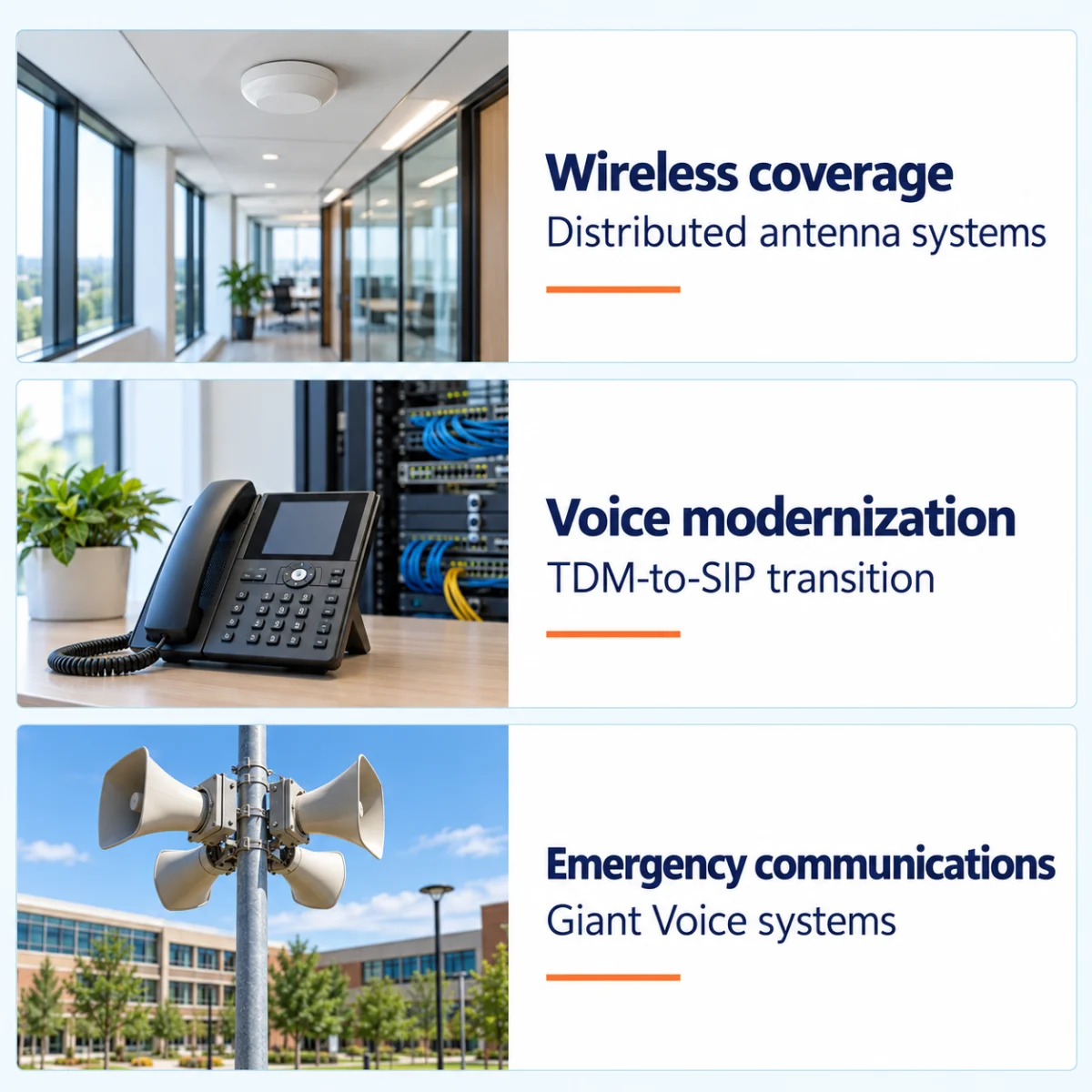
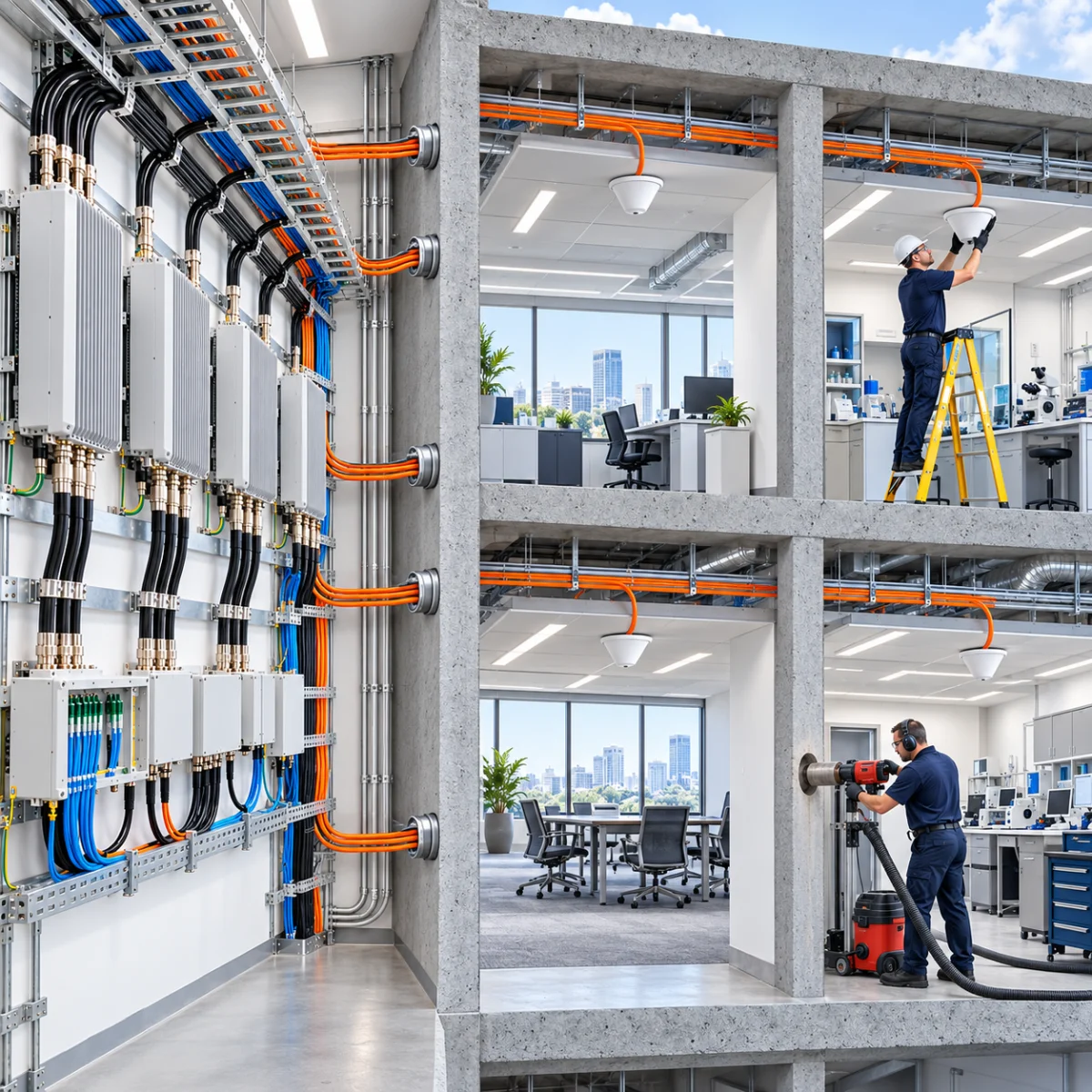
Thick walls can interrupt wireless coverage inside secure facilities. We install distributed antenna systems (DAS) that connect ceiling antennas to equipment in the main communications room.
Coordinate cable pathways, wall penetrations, and installation around the building's layout, access, and operating requirements.
Run cable between the main communications room and antenna locations throughout the facility.
Install and integrate antennas throughout the building, coordinating the work around facility access and operating requirements.
Connect the equipment room to the spaces your people use. We coordinate low-voltage cabling and installation with the wider communications requirement.
Install copper and fiber cabling between communications rooms, equipment, and connection points throughout the facility.
Coordinate cable pathways, wall penetrations, and installation around the building's layout, access, and operating requirements.
Connect cabling work with equipment installation and the team's handoff responsibilities.
Explore networks and infrastructureChoose the right scope for the users, coverage area, and existing environment.
Distributed antenna system (DAS) design, equipment coordination, installation, and commissioning support for in-building communications.
Migration from legacy time-division multiplexing (TDM) telephone systems to Session Initiation Protocol (SIP) based voice services.
Giant Voice and related mass-notification system implementation and integration support.
Communications equipment depends on the facility, network, power, and installation plan.
Establish the required service area, installation conditions, and technical dependencies.
Coordinate the supporting infrastructure, materials, and installation responsibilities.
Plan interfaces and transition work around the systems the customer intends to retain.
Testing and handoff should reflect the actual communications scope.
Build the agreed functional checks and acceptance requirements into the delivery plan.
Prepare the project documentation, knowledge transfer, and support responsibilities required for operations.
Identify the coverage, voice, or notification requirement and current environment.
Bring engineering, equipment, facilities work, and installation into one plan.
Validate the agreed functions and prepare the operating team.
Tell us about the environment and the coverage or modernization work you are planning.