Understand material usage
Identify high-use parts and examine consumption across the materials included in the program.

Vendor-managed inventory (VMI) connects material needs with stocking, inventory visibility, and replenishment. Our artificial intelligence (AI)-enabled reporting helps customers understand usage and make informed inventory decisions.
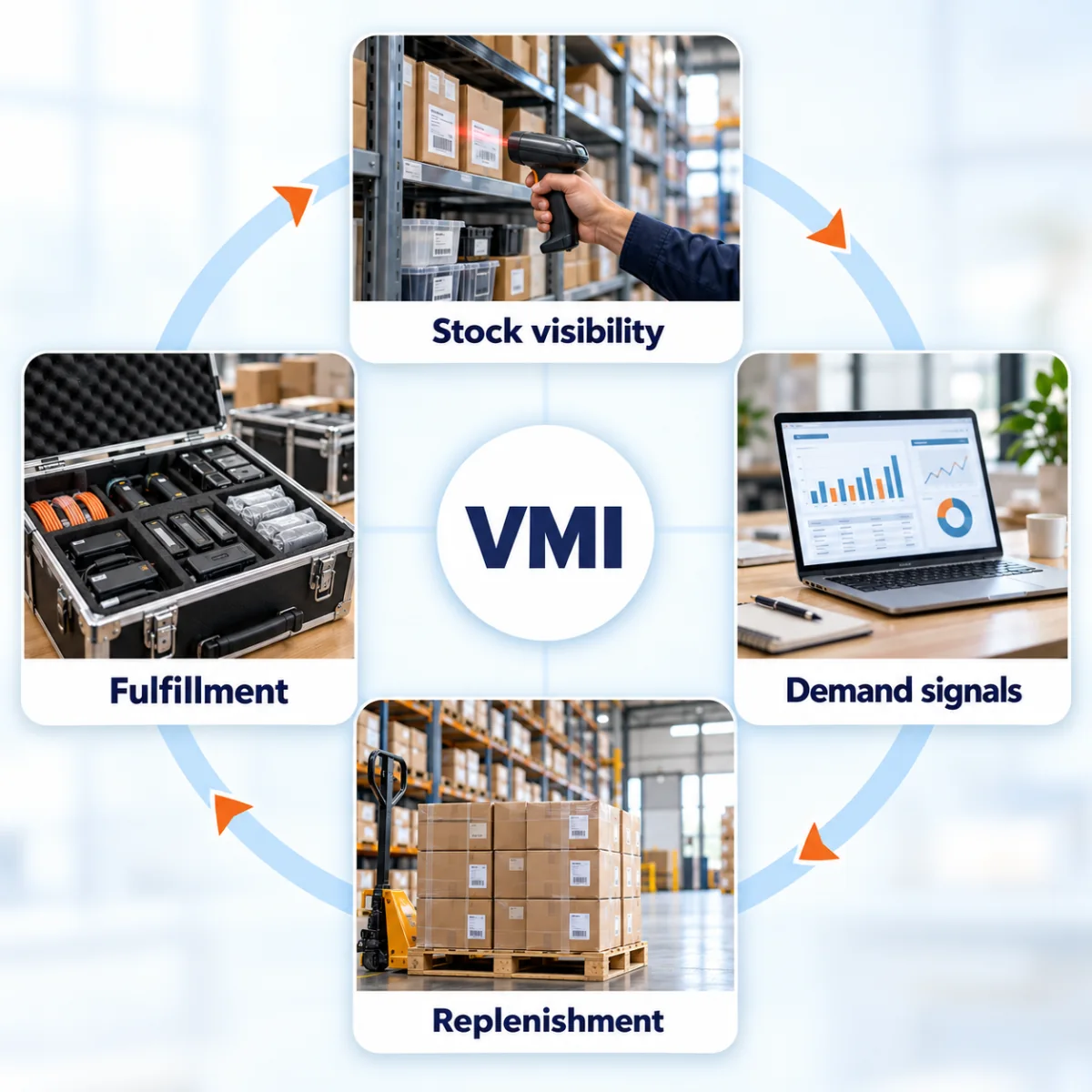
We turn available program data into reviewed intelligence reports. Each report supports customer decisions within the agreed scope.
Identify high-use parts and examine consumption across the materials included in the program.
Examine usage trends and variability. Identify data gaps that affect interpretation.
Use the findings to support customer discussions about stocking, kitting, and replenishment priorities.
The right VMI model depends on the material, facility, and commercial arrangement.
Define the consumables or other materials included, the locations served, and the activities the inventory supports.
Establish who monitors stock, who approves purchases, and how replenishment decisions are made.
Agree inventory ownership, purchasing responsibilities, and any financing arrangements for the specific program.
Inventory visibility needs a defined process and people responsible for keeping it current.
Use the selected inventory system and reporting process to track the material included in the program.
Plan staffing for receiving, stocking, inventory management, and fulfillment as required.
Connect replenishment activity with procurement and the vendors supporting the operation.
A repeatable process still needs to reflect the way your team works.
Plan material locations, access, and fulfillment around the operation being supported.
Review material needs, inventory activity, and changes with the customer team.
Add kitting, staging, and distribution where the program needs them.
Learn more
Identify the material, operating workflow, and available usage information.
Agree staffing, systems, stocking, ownership, and approval requirements.
Coordinate daily inventory work and review replenishment needs with the customer.
Tell us where inventory creates extra work and what your current stocking process looks like.